
A deck boosts the value of your home and makes it a more livable outdoor space. But, a deck requires routine maintenance.
Regular cleanings include sweeping off debris and washing with mild soap. Pressure washing may also be necessary for tough stains.
Be sure to replace popped nails. Line the new nail up next to — but not in — the old hole, and hammer it in place.
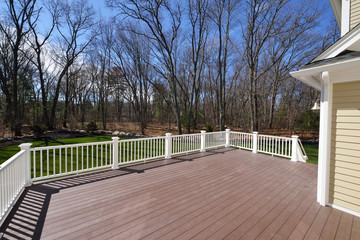
Deck Installation
Decks add a level of usable outdoor space that can make your yard feel like an extension of your home, and they often boost property value. A wood deck costs an average of $21,000, but homeowners recover 89% of the investment in added home value.
A good contractor can help you plan and execute your deck installation with skill and care, saving you time and frustration. A professional can also help you navigate the sometimes complicated construction process, including permitting and building code compliance.
Before constructing the deck frame, it’s important to prepare the area for footings. Use batter boards and Mason’s strings to determine the footing locations, then dig holes deep enough to extend below the frost line. After preparing the holes, a professional will pour concrete to create sturdy foundations for the posts and beams.
Installing the deck joists is a labor-intensive and time-consuming step. The joists must be perpendicular to the ledger board and properly secured with structural hardware. Once the joists are in place, the next steps of the deck build can proceed.
Decking installation requires attention to detail and a keen eye for quality. Keep in mind that ipe and other exotic hardwoods are difficult to cut and drill into, so you’ll likely need special tools for the job. It’s also important to acclimate the decking for 48 hours before installing and to ensure consistent gaps with spacers. Pre-drill all fastener holes to minimize the risk of splitting or fracturing. Finally, it’s important to use 304 stainless steel fasteners, as using any other type can cause unattractive discoloration and corrosion in the surrounding wood.
Deck Repair
While many deck issues can be resolved with repairs, the decision to repair or replace your deck ultimately comes down to a range of factors including cost and structural integrity. Repairs are usually less expensive than a replacement, but if your deck is significantly deteriorated and you’re looking for a long-term solution, replacing your deck with low-maintenance composite or capped polymer decking might be a better investment.
Inspecting the Structure
One of the best indicators that your deck is due for repair is wood rot or mildew. This typically occurs in the joints and around screws, since they tend to trap moisture more than other parts of the deck. Treating wood rot is typically as simple as applying a fungicide to affected areas, but more severe cases may require the replacement of damaged boards. Structural components like beams and joists should also be inspected for damage.
In addition to checking for signs of rot, a good inspection should cover the stairs and railings as well. Loose railings or balusters can pose safety risks, so repairing them should be a priority. Tightening loose supports and replacing sagging or missing rungs can be easy fixes, but it’s important to consider whether a temporary fix might lead to further problems in the future. In the case of unsafe or wobbly stairs, it might be more efficient and economical to replace your deck altogether.
Deck Staining
Staining is a great way to protect your deck and enhance its appearance. It will keep the wood protected from moisture and sun damage. A quality stain will also help to prolong the life of your deck by preventing it from becoming moldy or mildewy. Deck stains are available in many colors and finishes. They can be transparent or semi-transparent to allow some of the natural wood color to show through. Some stain products also contain fungicides and mildewcides to protect the deck from fungal growth.
There are water-based and oil-based deck stains. The type you choose will depend on your personal preference and the climate in your area. Water-based stains are generally more environmentally friendly and easier to apply and clean up. However, they may not offer as much protection from moisture or UV damage as oil-based stains.
It is important to prep your deck before applying a stain. The surface must be free from mildew, dirt, and debris. We recommend using BEHR PREMIUM Wood Stain & Finish Stripper to remove any old stains and to prepare the surface for staining. The deck should be swept and completely dry before staining. It is a good idea to use a high-quality brush or roller to work the stain into the wood fibers and cells.
It will take 24-48 hours for your deck to fully dry after it is stained. It is important to find a time when it is not likely to rain in order to get the best results.
Deck Sealing
A properly sealed deck can help reduce the occurrence of wood rot, fungus, mold and other damage. It also helps minimize the effects of harsh UV sunlight on the surface of your wood deck. This can help preserve the color and beauty of your deck over time.
Our experienced team can apply a deck sealer that will lock out moisture, preventing fungal growth and reducing the impact of UV rays on your wood. We can apply a transparent coating that allows the natural grain of your wood to show through, or you can choose from a variety of semi-transparent and solid stains that provide a more dramatic color option.
Before the sealer is applied, it is important that your deck is thoroughly cleaned and that any traces of mildew, dirt, or debris are removed. This ensures that the sealing materials will adhere and penetrate the wood effectively. Once the deck has been properly prepared, it is necessary to wait two clear days before applying the sealer to allow for proper absorption and a long-lasting effect.
It is also a good idea to protect surrounding plants, grass or any other area that you don’t want to be stained by the deck staining process. Once the deck has been sanded, it is a good idea to apply one thin coat over a two-to-three-board section. The best way to apply a deck sealer is with a brush, roller or sprayer.